What To Eat In Guangzhou:
The Dish, The Shop, The Price
Every dish comes with a shop that actually cooks it, a price, and the hour or season worth eating it. Cantonese is a technique cuisine — the notes explain what each technique is for, which is the difference between eating well and eating expensively.
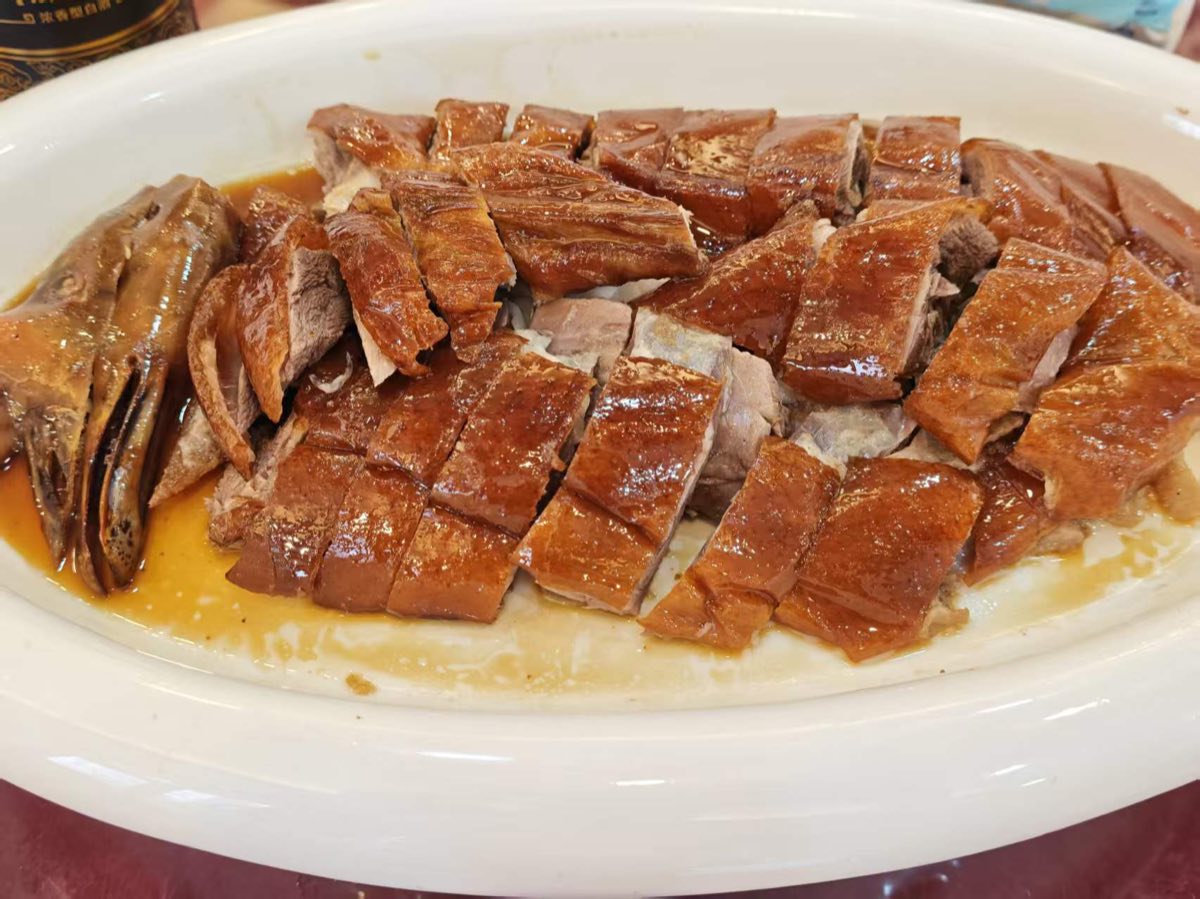
If you eat five things in Guangzhou, make them roast goose (order 下庄, the leg half), black char siu at Bing Sheng asking for 半肥瘦, half fat and half lean, a bowl of bamboo-pole wonton noodles at 吴财记, a 沙沙煲 sizzling clay pot at 惠食佳 or 啫八, and double-skin milk. That is roughly ¥350–600 all in (about $50–85), and four of the five cost under ¥60. The dish most visitors miss entirely is the sizzling clay pot 啫啫煲 — it is arguably Guangzhou's most distinctive restaurant dish and it barely appears in English-language guides.
Fourteen dishes, where to eat each one
One shop per dish, chosen because it specialises rather than because it is famous. ~¥7.15 = $1. Verify hours on the day — small Guangzhou shops close early when they sell out, which is a good sign rather than a bad one.
| Dish | Where | Price | The detail that matters |
|---|---|---|---|
| Roast goose 烧鹅 | 鹅公村 Egongcun, 402 Huadi Blvd South, Liwan · 10:00–22:00 | ¥60–120 for a portion | Black-brown birds of Qingyuan/Magang lineage at about 90 days, air-dried, maltose-glazed, hung over lychee wood, served with sour plum sauce. Order 下庄, the lower half with the leg — the prized cut. |
| Black char siu 黑叉烧 | 炳胜 Bing Sheng (two Michelin one-stars) | ¥80–140 a plate | Fatty pork neck lacquered to near-black. Ask for 半肥瘦, half fat half lean. Ordering lean-only char siu is the beginner's mistake and the reason people think they dislike it. |
| Wonton noodles 云吞面 | 吴财记面家, Helongli 20 off Datong Rd, Liwan · 70+ years | ¥15–30 | 竹升面 — alkaline noodles kneaded by a man riding a bamboo pole. The wontons go on the bottom and the noodles on top so the noodles do not waterlog. A proper small bowl is 细蓉. |
| Cheung fun 肠粉 | 银记肠粉店 Yin Ji, Huifu East Rd branch · ~06:30–12:00 | ~¥20 shrimp and pork | The technical differentiator is stone-ground rice batter — 华记石磨美食 on Xihua Rd grinds its own, which is why the sheet is silkier and slightly grey rather than glassy white. |
| Beef offal 牛杂 | 容意发牛杂店, 诗书路 · Michelin Bib Gourmand | ¥15–30 | Lung, tripe, intestine, tendon and daikon braised in a 柱侯 master stock, snipped into a bowl with scissors. The daikon is not filler — it is the point, because it drinks the stock. |
| Congee 粥 | 伍湛记, Longjin Rd, Liwan | ¥15–35 | 明火白粥: rice cooked over open flame until the grains vanish, then 生滚, raw ingredients dropped in to cook to order. 艇仔粥 is the Guangzhou one — peanuts, jellyfish, squid, fried noodle, pork skin. |
| Sizzling clay pot 啫啫煲 | 惠食佳 Wisca, Haizhu (one Michelin star) · 啫八 Zhe Ba (Bib) | ¥80–160 a pot | The dish foreigners miss. Eel, chicken, intestine or frog into a screaming-hot dry pot with ginger, scallion and garlic, lid on, carried to the table still shrieking. Not the same thing as claypot rice. |
| Claypot rice 煲仔饭 | 超记煲仔饭 (Michelin Selected) · 民记煲仔饭, 452 Huifu East Rd, since 1979 | ¥30–60 | Charcoal under a clay pot, toppings laid on late, soy poured round the rim to build 饭焦, the scorched crust. Peak season is October to February, the 腊味 cured-meat months. |
| Old-fire soup 老火汤 | 达扬原味炖品, 160-1 Wenming Rd · 12:00–24:00 · Bib Gourmand | ¥25–60 a bowl | Two to four hours of hard simmering with herbs matched to the season — 清热 cooling in summer, 润燥 moistening in autumn. Served before the meal, not after. |
| Steamed fish 清蒸鱼 | 海门鱼仔店 (Bib) · 信记海鲜 (one star) | ¥80–200 a fish | Live fish, 8–10 minutes, scallion and ginger, smoking peanut oil poured over, then 蒸鱼豉油. Anything more elaborate is read locally as a cover-up for a fish that is not fresh. |
| White cut chicken 白切鸡 | 文记壹心鸡 (Bib) · any serious 茶楼 | ¥50–90 half bird | Poached just under the boil then plunged into ice so the skin sets gelatinous. The bone stays faintly pink at the joint — that is correct and it is not undercooked. |
| Pigeon 乳鸽 | 大鸽饭 Da Ge Fan · Michelin Bib Gourmand | ~¥200–300pp | 红烧鸽皇 and truffle pigeon rice. Deeply Guangzhou, almost absent from English guides, and one of the easier ways to eat at a Bib Gourmand house without queueing at 07:00. |
| Double-skin milk 双皮奶 | 南信 Nanxin, 47 Dishifu Rd · 10:00–22:30 · 仁信 Renxin, 550 Huifu East Rd | ~¥15 | Buffalo milk steamed twice so two skins form — a Shunde Daliang invention. Nanxin is the tourist-accessible classic and it is genuinely good. |
| Ginger milk 姜撞奶 | 沙湾甜品食馆, Xihua Rd · Shawan in Panyu is the homeland | ~¥15–25 | Hot buffalo milk struck into raw ginger juice; the ginger protease sets it into custard in about ten minutes. It only works with high-fat buffalo milk at 70–80°C, which is why it is a Guangdong dish and stays one. |
Shops and prices from operator listings and the 2025 Michelin Guangzhou selection, checked August 2026. One common conflation worth correcting: 伍湛记 Wu Zhan Ji is a congee shop, not a noodle shop — several English pages file it under wonton noodles. For the cheap-and-real noodle option instead, 林师傅 at 485 Xihua Rd sells a bowl at ¥10–20.
Goose first, and order the leg half
Hong Kong gets the international credit for roast goose. The birds, the wood and most of the method are from here.
The Guangdong roast goose is a specific animal — a black-brown bird of the Qingyuan and Magang lineage, killed at around 90 days, air-dried until the skin tightens, brushed with maltose and hung over lychee wood, which burns hot and sweet and is half the flavour. It arrives chopped, with a saucer of sour plum sauce whose job is to cut the fat rather than to add anything. Order 下庄, the lower half with the leg: the meat there stays juicier and the skin renders better than on the breast, and it is what a local orders without thinking.
The dedicated specialist is 鹅公村 Egongcun at 402 Huadi Boulevard South in Liwan, open 10:00–22:00 — a goose-only house rather than a general roast-meat counter. For the best all-round roast meats in one sitting, 炳胜 Bing Sheng is the answer, and it is also where the modern char siu benchmark lives. If you want an older, gentler preparation, 津津名菜馆 at 88 Longjin West Road does 古法碌鹅, a braised rather than roasted goose, at roughly ¥100–200 a head.
Char siu deserves its own instruction. The modern benchmark is 黑叉烧, black char siu, at Bing Sheng: fatty pork neck lacquered until the edges go almost black, sweet and slightly bitter at the crust. When you order, say 半肥瘦 — half fat, half lean. Lean-only char siu is the standard beginner's mistake, it dries out in the oven, and it is why plenty of visitors decide they do not like a dish they have never actually eaten. Bing Sheng runs ¥250–500 per person and holds two Michelin one-stars plus two Black Pearl diamonds; it is the strongest single recommendation in the city for one proper Cantonese dinner, and the case is laid out on the guides page.
Noodles, rice rolls, offal and congee
This is the tier that separates Guangzhou from every other Chinese food city, and it is where the 45 Bib Gourmand shops live.
云吞面 is a precise construct, not a bowl of soup with dumplings in it. The noodles are 竹升面, pressed under a bamboo pole that a man literally sits and rides to knead alkaline dough into a thin, springy strand. The wontons are whole shrimp and pork. The broth is dried flounder, dried shrimp roe and pork bone. And the assembly rule is the one nobody mentions: the wontons go on the bottom of the bowl and the noodles sit on top, clear of the liquid, so they do not waterlog before you eat them. A proper small bowl is called 细蓉. Go to 吴财记面家 in Helongli 20 off Datong Road in Liwan, open more than 70 years and still pressing on site. 昇运来云吞面 is Michelin Selected, 周门 took a 2025 Bib Gourmand for hand-made noodles, and 林师傅 at 485 Xihua Road is the ¥10–20 option.
肠粉 is judged on the sheet, not the filling. The differentiator is 石磨, stone-ground rice batter — slower, slightly coarser, and it produces a noodle that is silky rather than merely slippery. 华记石磨美食 on Xihua Road grinds its own; 银记肠粉店 Yin Ji is the famous name and the Huifu East Road branch is the classic, open roughly 06:30–12:00 with a shrimp-and-pork roll at about ¥20; 芳记 at 280 Xihua Road runs 07:00–23:30 if you want it outside breakfast hours.
牛杂 at ¥15–30 is the best value in the city. Lung, tripe, intestine, tendon and daikon are held in a 柱侯 master stock — a bean-paste-based braise that gets topped up rather than replaced — then snipped into a paper bowl with scissors. 容意发牛杂店 on 诗书路 holds a Bib Gourmand and is the benchmark. And congee is two techniques stacked: 明火白粥, rice broken down over open flame until the grains are invisible, then 生滚, raw ingredients dropped in and flash-cooked to order. 艇仔粥 is the Guangzhou one — peanuts, jellyfish, squid, fried noodle scraps and pork skin, texture-maximalist, named for the Pearl River sampans that used to sell it. 及第粥, with pork liver, meatball and intestine, is named for the three ranks of imperial examination success; 伍湛记 on Longjin Road is the address. Night congee is a genuine local genre and it is covered on the late-night page.
啫啫煲 is the dish you will otherwise miss
They sound the same in English and they are not remotely the same dish. One is rice. The other is the loudest thing on a Cantonese menu.
煲仔饭 is claypot rice: raw rice and water in a clay pot over charcoal, toppings laid on late so they steam rather than stew, and soy sauce poured in a circle round the rim at the end. That last move is the whole point — it builds 饭焦, the scorched crust on the base, which you scrape up and which is the reason anyone orders this instead of a plate of rice. ¥30–60. It is also genuinely seasonal: peak is October to February, the 腊味 cured-meat months, when the sausage and cured pork belly toppings are at their best and the pot makes sense in the cooler weather. 超记煲仔饭 is Michelin Selected, 香港庙街煲仔饭 holds a Bib, and 民记煲仔饭 at 452 Huifu East Road has been at it since 1979.
啫啫煲 is something else entirely and it is arguably Guangzhou's most distinctive restaurant dish. The pot goes on the fire empty and dry until it is screaming hot. Eel, chicken, intestine or frog goes in with ginger, scallion and garlic, the lid slams on, and the whole thing is carried to your table still shrieking — 啫 is onomatopoeia for the noise. There is no rice and almost no liquid; the cooking happens in the thirty seconds between the kitchen and the table. 惠食佳 Wisca in Haizhu holds a Michelin star and built its reputation on this, and 啫八 Zhe Ba holds a Bib Gourmand as the specialist. It barely appears in English-language guides, which is the single biggest gap between what visitors eat here and what residents eat.
Old-fire soup, and why the fish is plain
The least exportable layer of Cantonese food culture, and the most misread one.
老火汤 — old-fire soup — is two to four hours of hard simmering, and 炖汤 is the gentler double-boiled version. What makes it a cultural institution rather than a starter is the dispensary behind it: a rotating set of Chinese materia medica matched to the season and to the drinker's condition. 清热 cooling formulas in summer, 润燥 moistening ones in autumn, with seasonal markers like 五指毛桃 five-finger peach, 霸王花 night-blooming cereus, 章鱼干 dried octopus and 鸡骨草. It is served before the meal, not after, which trips up almost every visitor. 达扬原味炖品 at 160-1 Wenming Road, open 12:00–24:00, holds a Bib Gourmand for its coconut chicken; 勉记炖品皇 also holds one; 宏图府 Howard's Gourmet is the fine-dining expression and a Michelin one-star.
Seafood runs on one piece of dogma: 清蒸, steam it. A live fish, eight to ten minutes, scallion and ginger, smoking peanut oil poured over at the end, then 蒸鱼豉油 soy. Anything more elaborate is read locally as a cover-up for a fish that is not fresh, which is why an expensive Cantonese seafood meal can look almost austere on the plate. 信记海鲜 holds a Michelin star and 海门鱼仔店 a Bib Gourmand.
One correction that matters if you are planning around it: the Huangsha Aquatic Products Market has relocated. The original ran for 31 years beside Huangsha metro and was southern China's largest live-seafood market. The new site opened on 8 September 2025 at 188 Shaluo Longwan Street, Dongsha, in Liwan, across 110,000m², and the old site closed in October 2025. Whether the new site keeps the 加工 tier, where you buy a fish downstairs and a restaurant cooks it upstairs, could not be verified — that tier was the entire reason tourists went, so confirm before you make a trip of it.
蛇羹, snake soup, is history here now. China's 2020 wildlife ban ended the wild-caught trade; farmed snake remains licensed but the industry contracted hard and the dish went from an autumn ritual to a niche. The proverb 秋风起,三蛇肥 — when the autumn wind rises, the three snakes are fat — is still quoted, and that is the right place to leave it. No currently-operating Guangzhou snake restaurant could be verified for this page, so there is no address here on purpose.
The two things a guide actually buys you
Not the food — you can buy that yourself for ¥15–60 a dish. What a guide solves is the ordering systems and the shops with no English and no picture menu. The full do-it-yourself comparison is on the food tours page.
Questions people actually search
What is the most famous dish in Guangzhou?
Dim sum as a category, and roast goose 烧鹅 as a single dish — a 90-day Qingyuan or Magang bird, air-dried, maltose-glazed and hung over lychee wood, served with sour plum sauce at ¥60–120 a portion. Order 下庄, the lower half with the leg. The dish residents would add and visitors almost never order is 啫啫煲, the sizzling dry clay pot.
What is the difference between 煲仔饭 and 啫啫煲?
煲仔饭 is claypot rice — rice cooked over charcoal with toppings added late and soy poured round the rim to build 饭焦, the scorched crust, at ¥30–60. 啫啫煲 has no rice at all: an empty pot is heated until it screams, meat and aromatics go in, the lid slams on and it reaches the table still sizzling. Different dishes, different restaurants, and only the first one is seasonal.
When is claypot rice season in Guangzhou?
October to February, the 腊味 cured-meat months. The cured sausage and pork-belly toppings are made in the cool dry season and the dish is built around them, so a claypot rice eaten in July is a lesser version of the same thing. This is one of the few genuinely seasonal recommendations in Cantonese cooking.
Is the Huangsha seafood market still open?
Not at the old address. The original market ran 31 years beside Huangsha metro and closed in October 2025; a new 110,000m² site opened on 8 September 2025 at 188 Shaluo Longwan Street, Dongsha, Liwan. Whether the new site keeps the 加工 cook-your-purchase tier — the reason visitors went — is unverified, so confirm before travelling out there.
Can you still eat snake soup in Guangzhou?
Effectively no, as a travel plan. China's 2020 wildlife ban ended the wild-caught trade and although farmed snake stayed licensed, the industry contracted hard and 蛇羹 went from an autumn ritual to a niche. The proverb 秋风起,三蛇肥 survives it. No currently-operating restaurant could be verified, so this page deliberately gives no address.
Where do I eat roast goose in Guangzhou?
鹅公村 Egongcun at 402 Huadi Boulevard South in Liwan, 10:00–22:00, is the dedicated goose specialist. 炳胜 Bing Sheng is the better choice if you want the full roast-meat spread including the black char siu, at ¥250–500 per person. For an older braised preparation, 津津名菜馆 at 88 Longjin West Road does 古法碌鹅 at roughly ¥100–200 a head.
What should I order at a Guangzhou seafood restaurant?
A live fish, steamed — 清蒸 — for eight to ten minutes with scallion, ginger, hot peanut oil and 蒸鱼豉油 soy, at ¥80–200 for the fish. That plainness is the point: heavy sauces are read here as a cover for a fish that is not fresh. 海门鱼仔店 holds a Bib Gourmand and 信记海鲜 a Michelin star.