ThingstodoGuangzhou
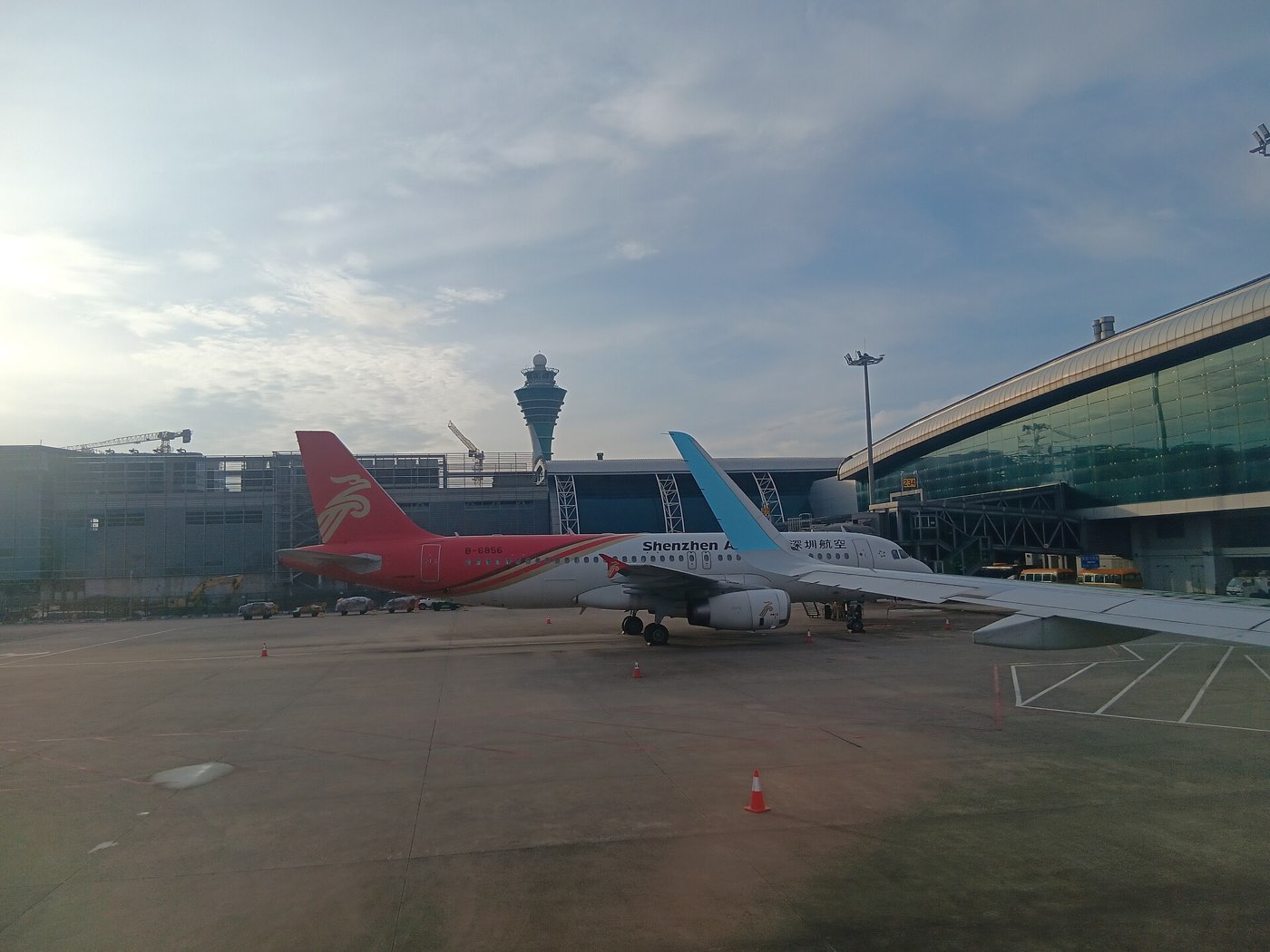
A terminal at Guangzhou Baiyun International Airport
The question everything else depends on

Can You Enter China Visa-Free in 2026? The Guangzhou Rules, By Passport

免签入境50 countries · 30 days55 nationalities · 240 hoursBaiyun: designated port

Almost every English-language page about entering China is one or two policy generations out of date. One of the top-ranking Guangzhou layover guides still serves its advice on a URL containing 72-hour-visa-free-transit. This page is current to August 2026.

Photo: Timothytyy
Quick answer
WORTH IT Most readers of this page do not need a visa

If you hold one of 50 passports — including the UK, Canada, Australia, New Zealand, Japan, South Korea and every Schengen state — you enter China visa-free for 30 days, for tourism, business, family visits or transit. If you hold a US, Mexican, Ukrainian or Indonesian passport you are not on that list, but you are one of 55 nationalities eligible for 240-hour (10-day) visa-free transit, and Guangzhou Baiyun became a designated port for it on 5 November 2025. The transit route needs one thing the 30-day route does not: a confirmed onward ticket to a third country within 240 hours — and Hong Kong counts.

30 days · 50 countries240 hours · 55 nationalitiesTrial ends 31 Dec 2026
Start with your passport

Which route into China is yours?

Four routes exist and they are routinely confused, including by airline check-in staff. Pick your passport below, or read all four — every country name and every rule on this page is in the text, not hidden behind the selector.

Pick a passport, or read all three routes.

30 days, no visa

Unilateral visa-free entry — 50 countries

You land, you show your passport, you get 30 days. No application, no fee, no invitation letter, no onward ticket requirement. This is the simplest border in Asia right now and most people entitled to use it do not know it exists.

  • 30 days per entry, counted from the day you arrive. It was 15 days at launch in December 2023 and was extended to 30 on 17 November 2024. It has not gone beyond 30.
  • Valid for business, tourism, family visits, exchange and transit. Ordinary passports only — not diplomatic or service passports, and not for study or paid work.
  • The UK and Canada were added on 17 February 2026. If your guidebook or the blog post you are reading does not mention this, it predates the change and you should not trust its other dates either.
  • This is a trial, currently valid through 31 December 2026. It has been rolled forward twice already, most recently on 3 November 2025, and will very likely be rolled forward again — but write it in pencil if you are booking into 2027.
  • You will see blogs claiming 77 or 79 countries. That is the unilateral 50 plus the 29 mutual-treaty countries summed, and the arithmetic varies between sources. The number you can rely on is 50 unilateral.
All 50 countries on the unilateral list

Brunei · France · Germany · Italy · Netherlands · Spain · Switzerland · Ireland · Hungary · Austria · Belgium · Luxembourg · Australia · New Zealand · Poland · Portugal · Greece · Cyprus · Slovenia · Norway · Slovakia · Finland · Denmark · Iceland · Andorra · Monaco · Liechtenstein · South Korea · Bulgaria · Romania · Croatia · Montenegro · North Macedonia · Malta · Estonia · Latvia · Japan · Brazil · Argentina · Chile · Peru · Uruguay · Saudi Arabia · Oman · Kuwait · Bahrain · Russia · Sweden · Canada · United Kingdom

240 hours (10 days)

Visa-free transit — 55 nationalities, including the United States

This replaced the old 72-hour and 144-hour schemes on 17 December 2024, and it is the route for Americans. Ten days is enough for Guangzhou, Shunde, Foshan and a Hong Kong exit without ever touching a visa application. Almost nothing in English has caught up with it.

  • 240 hours — ten days — counted from 00:00 on the day after you arrive, so you effectively get most of an extra day.
  • Guangzhou Baiyun is a designated port, and has been since 5 November 2025. Guangdong is also one of the few provinces where you may exit from any open port in the province, not just the one you entered through.
  • You may cross provincial boundaries between the 24 eligible regions. That was the headline change from the 144-hour era and it is what turns a layover into a trip.
  • The catch: you must hold a confirmed onward ticket — air, sea or rail — with a date and a seat, to a third country or region, departing within 240 hours.
  • Hong Kong, Macau and Taiwan count as third regions. This is the most valuable sentence on this page: fly into Guangzhou, take the high-speed train to Hong Kong West Kowloon inside ten days, and you qualify. The train takes 47 minutes.
  • Tell your airline at check-in that you are using the 240-hour transit scheme, or they may deny you boarding. At Baiyun, use the dedicated 24/240-hour transit lane. Hotels register your address with the police automatically; if you stay in a private home you must do it yourself at the local 派出所 within 24 hours.
Passports for which transit is the only route (the other eligible nationalities are already on the 30-day list)

United States · Mexico · Ukraine · Indonesia

Visa-free layover tour with airport transfer ↗
30–90 days by treaty

Mutual visa-exemption treaties — 29 countries

A separate and older scheme: bilateral agreements granting 30 to 90 days depending on the treaty. If your country has one, it usually beats the unilateral trial because it is permanent rather than provisional.

  • 29 countries hold mutual exemption treaties with China. Terms vary by treaty — 30, 60 or 90 days — so there is no single number to quote and this page will not invent one.
  • Unlike the unilateral trial, treaty exemptions are not time-limited and do not expire on 31 December 2026.
  • Check the specific terms with your nearest Chinese embassy. This is the one route where the detail genuinely varies country by country and a generic answer would be worse than none.
Apply for a visa

Everyone else — the L or M visa

If you are on none of the lists above, you apply. For Guangzhou that is usually an L (tourist) visa, or an M (business) visa if you are attending the Canton Fair and want a multi-entry.

  • India is not on the unilateral list, and neither is most of Africa or most of non-treaty Southeast Asia. Rather than guess at a list that changes every few months, check the current position with your nearest Chinese embassy.
  • For the Canton Fair, the M business visa is the traditional route: the official invitation letter plus four to six weeks and US$50–140. Note that this is now unnecessary for most Western buyers — see below.
  • A 24-hour direct transit exemption exists for all nationalities, but you cannot leave the airport city. If your connection is under 24 hours and you are not eligible for anything above, that is your ceiling.
  • A separate 6-day Pearl River Delta group scheme still exists for nationals who qualify for neither main scheme, travelling in a group of two or more organised by a Hong Kong or Macau agency, covering ten Greater Bay Area cities including Guangzhou.
Named in the current guidance as outside the unilateral scheme

India

Rules current to August 2026 and sourced from the Ministry of Foreign Affairs and National Immigration Administration announcements. Immigration policy is the operator's call, not ours — confirm with your nearest Chinese embassy before you book a non-refundable flight, and re-check any 2027 travel against the trial's expiry.

The rule that costs people money

Leaving for Hong Kong uses up a single-entry visa

If you hold a single-entry Chinese visa, a day trip to Hong Kong or Macau ends your stay in mainland China. Both are separate immigration jurisdictions. This one paragraph will save some readers a rebooked flight.

The mistake is understandable: Hong Kong and Macau are Chinese territory, the train from Guangzhou South takes 47 minutes, and immigration for both sides is co-located in the same building at West Kowloon. None of that changes the fact that crossing is an exit from the mainland. On a single-entry visa you cannot come back.

It runs the other way too, and in your favour. Hong Kong West Kowloon is itself a designated 240-hour visa-free entry port into the mainland. An eligible traveller can fly into Hong Kong, take the train north, and enter China visa-free at the station. For Americans planning a Guangzhou trip, going in via Hong Kong is often cleaner than going in via Baiyun, because the onward ticket requirement is satisfied by the flight you already hold.

If you are on the 30-day unilateral scheme, none of this applies — each entry is a fresh 30 days and you can bounce to Hong Kong and back as often as you like.

Questions people actually search

Visa questions people actually search

Do I need a visa for Guangzhou?

Probably not. If you hold one of 50 passports — the UK, Canada, Australia, New Zealand, Japan, South Korea, Brazil and all of Schengen among them — you get 30 days visa-free with no application. If you hold a US passport you are not on that list, but you qualify for 240-hour visa-free transit provided you have an onward ticket to a third country or region within ten days, and Hong Kong counts as one.

Is Guangzhou a 240-hour visa-free transit port?

Yes. Guangzhou Baiyun International was added on 5 November 2025, alongside Zhuhai Hengqin, Zhongshan, the Hong Kong–Zhuhai–Macao Bridge and Hong Kong West Kowloon rail station. Guangdong is also one of the provinces where you may exit from any open port in the province rather than your original entry point, which gives you unusually flexible routing.

What is the difference between the 144-hour and 240-hour transit schemes?

The 240-hour scheme replaced the 72-hour and 144-hour schemes entirely on 17 December 2024. It runs ten days instead of six, covers 65 ports across 24 provinces instead of a handful of city clusters, and crucially lets you cross provincial boundaries. If a page you are reading still refers to 144 hours, it is more than eighteen months out of date.

Does the visa-free scheme expire?

The unilateral 30-day scheme is a trial currently valid through 31 December 2026. It was extended on 17 November 2024 and again on 3 November 2025, so a further extension is likely but not announced. The 240-hour transit scheme and the 29 mutual-treaty exemptions are not on that clock. If you are booking travel into 2027, check before you commit to a non-refundable fare.

Do I need an onward ticket to enter visa-free?

Only on the 240-hour transit route, where a confirmed onward ticket with a date and a seat to a third country or region within 240 hours is the whole basis of your entry. The 30-day unilateral scheme has no onward-ticket requirement at all — you can arrive with a one-way flight and decide later.

Can I attend the Canton Fair visa-free?

Yes, if your passport is on the unilateral list — business is an explicitly permitted purpose, so a UK, Canadian, EU, Australian, Japanese or Korean buyer can simply turn up. This is a genuine change and almost nobody in the sourcing industry has written it up. One thing to watch: the autumn 2026 fair runs across three phases from 15 October to 4 November, so if you are attending more than one phase make sure your 30 days covers the gaps between them.

Do I have to register with the police?

Yes, within 24 hours of arrival — but if you are staying in a hotel they do it for you at check-in, which covers the overwhelming majority of visitors. If you are staying in a private apartment or an Airbnb, you must register yourself at the local police station (派出所). Take your passport and the address.

If you are transiting

Tours built around the visa-free transit window

The one product category that exists specifically because of this policy. A private layover tour that collects you airside and returns you to the terminal removes the two things that actually go wrong on a short transit: the ride back, and the passport-control queue you forgot to budget for.

Our pick
GetYourGuide
Visa-free layover private tour with airport transfer
See live price private, per group
Built for exactly this: collected at Baiyun, city loop, returned with buffer. The right call on a 9–12 hour connection where the metro round trip alone eats 90 minutes.
Check availability ↗
GetYourGuide
Airport pickup with 2-hour Canton heritage tour
See live price private, per group
The shorter version. Useful if you are arriving rather than transiting and want the old city on the way in instead of a hotel check-in and a nap.
Check price ↗
GetYourGuide
Baiyun airport to city centre private transfer
See live price per vehicle
No tour, just the car. Worth it landing after 22:30 or out of T3, which has no metro station of its own — you shuttle from Gaozeng.
Check price ↗
Once you are in

The two things that trip people up after the border

Entry is the easy part now. The friction has moved to payments and maps.

Alipay and WeChat Pay both take foreign Visa and Mastercard now, and since 12 October 2025 you can tap a foreign contactless card straight at the metro gate. Two catches nobody prints: payments over ¥200 carry a 3% surcharge, and WeChat's RMB cap is ¥6,000 per transaction whatever the dollar limit says. Since 1 February 2026 every business is legally required to accept cash again, so carry ¥500–1,000 as a backstop. Complete passport verification in the app before you fly, or risk control will hold you to about US$200 a go.

Google Maps does not work in mainland China. It is blocked, and even over a VPN the base map is shifted by China's mandatory GCJ-02 coordinate offset and the points of interest are years stale. The Directions button on this page is for planning from home. On the ground use Amap (高德地图), which has a real English mode — or just use the metro line, station and exit number printed on every page here, which is what locals use.