Plan a Guangzhou Trip:
the nine things to settle before you fly
Three of the nine changed in the last eighteen months and most English-language guides have not caught up: the visa rules, the payment rules, and the airport. Work down this page in order and everything else about the trip becomes a preference rather than a problem.
Only two things genuinely cannot wait until you land. Install and verify Alipay or WeChat Pay and complete passport verification — WeChat takes seconds, Alipay takes one to three business days, and until it is done risk control will hold you to about US$200 a transaction. And install and test a VPN at home, because VPN providers' own websites are blocked inside China and you cannot download one after arrival. Everything else — the metro, the airport, the money — you can solve on the ground.
The nine planning decisions
Can you enter visa-free?
Everything else depends on this one. Fifty passports enter for 30 days with no application at all, the UK and Canada added on 17 February 2026. Americans are not on that list but qualify for 240-hour transit, and Guangzhou Baiyun became a designated port for it on 5 November 2025.
The 240-hour transit rules in full
If the transit route is yours, this is the page that matters. It replaced the 72-hour and 144-hour schemes entirely on 17 December 2024, runs ten days, and lets you cross provincial boundaries — which is what turns a layover into a trip. Hong Kong counts as a third region.
Paying for things
Foreign Visa and Mastercard now bind to both Alipay and WeChat Pay, limits were raised sharply in 2026, and since 1 February 2026 every business is legally required to accept cash again. The catch is a 3% surcharge above ¥200 and a verification queue you do not want to join at the airport.
The apps you actually need
Amap for maps, DiDi for cars, Dianping for choosing restaurants, Alipay for everything else. And a VPN, installed and tested before you fly, because VPN providers' own sites are blocked from inside China.
Getting around
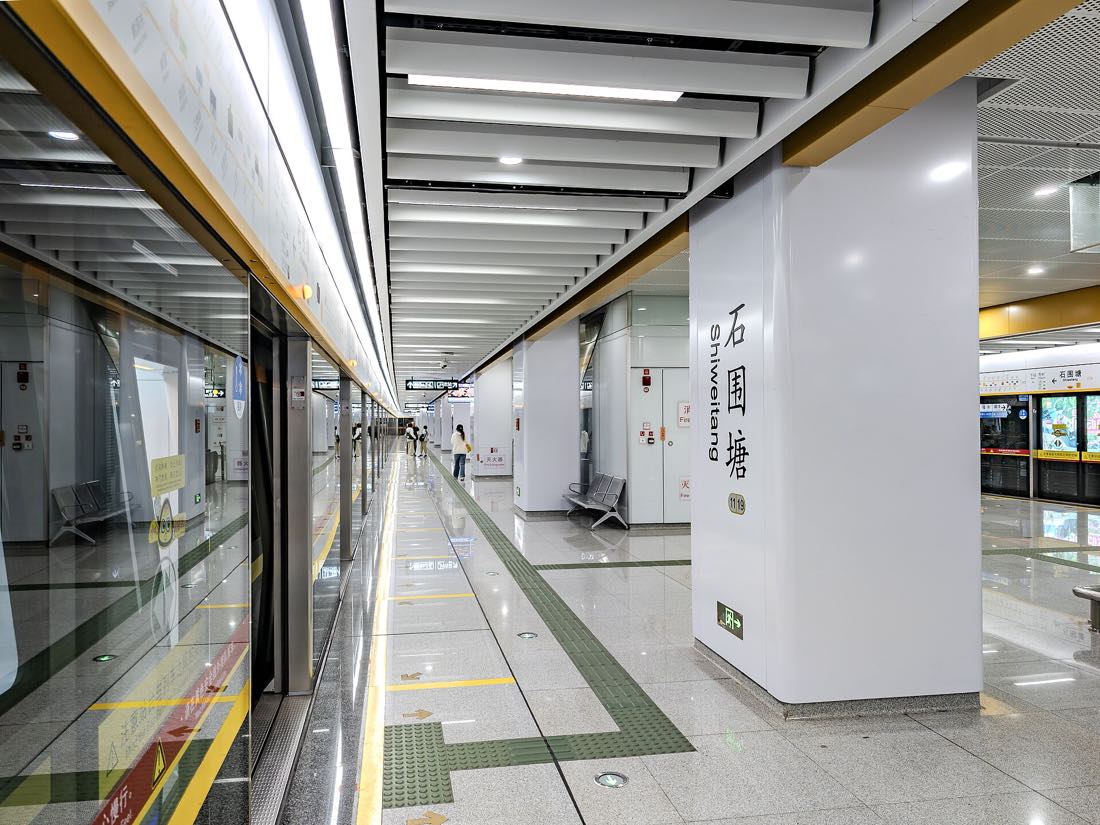
The metro answers almost every question in Guangzhou: 19 lines, around 780km, third busiest system in the world. Since 12 October 2025 you can tap a foreign contactless card straight at the gate — no app, no card, no ticket machine.
Baiyun airport
The single most out-of-date fact in circulation about Guangzhou. T3 has no metro station — you take Line 3 or 9 to Gaozeng, Exit B, then a free shuttle. T1 closed for renovation on 7 May 2026. If your booking says T1, check it.
Best time to visit
The weather verdict is clean and the collision is the story: the best weeks contain both National Day and the autumn Canton Fair. Late November to early December is the actual answer — same weather, no fair, low prices.
Is Guangzhou safe?
Violent crime against foreigners is rare to the point of statistical insignificance and solo women routinely walk home late. The real risk in Guangzhou is financial — taxi meters, tea houses, art students and, for business travellers, the Canton Fair hostess-bar bill.
The rules that catch people out
Carry tissues, expect a much smaller personal-space bubble, never escalate loudly, and understand that pedestrians do not have right of way and silent e-scooters use the pavement. That last one is the most likely way a visitor actually gets hurt here.
What must happen before you fly, and what can wait
Two items on this list have hard deadlines. The rest are recoverable on the ground, and treating them as urgent is how people end up buying a Tour Pass wallet they did not need.
| Task | Deadline | Why | Page |
|---|---|---|---|
| Confirm your entry route | Before booking flights | The 240-hour transit route requires a confirmed onward ticket with a date and a seat. That shapes what you book. | Visa and entry |
| Bind and verify a card in Alipay or WeChat | Before you board | Alipay verification takes 1–3 business days. Unverified, risk control typically caps you around US$200 a transaction. | Payments |
| Enable international online purchases and 3D Secure | Before you board | Your own bank will block the binding attempt otherwise, and you cannot fix that from a Chinese SIM. | Payments |
| Install and test a VPN | Before you board | VPN providers' own websites are blocked inside China. There is no way to download one after you land. | Apps |
| Install Amap, DiDi and Dianping | Before you board, ideally | All three are downloadable in China, but doing it on hotel Wi-Fi with no map app is a bad first hour. | Apps |
| Book Nanyue King, Guangdong Museum and Bai'etan slots | A few days ahead | Real-name WeChat bookings, and Guangdong Museum runs a 5,000-a-day cap. | Things to do |
| Book hotels | 60–90 days if it is a Canton Fair week | Fair-period rates run 2–4× normal and sell out. Any other week, days ahead is fine. | Where to stay |
| Buy an eSIM | Days ahead, or on arrival | Only the routing matters — Hong Kong or Singapore routing gets past the firewall, a local China SIM does not. | Apps |
| Work out the metro | On the ground | Bilingual signage and announcements throughout, and a foreign contactless card opens the gate. | Getting around |
| Get cash | On the ground | Bank of China, ICBC or China Construction Bank ATMs. ¥500–1,000 is enough as a backstop. | Payments |
Nothing on this list requires an agency, a visa service or a paid intermediary. If a page is trying to sell you one for a 30-day visa-free entry, it has not updated since 2024.
Three things that changed recently enough to catch out good guides
If a page you are reading gets any of these wrong, treat its other facts with the same suspicion.
Entry. The 72-hour and 144-hour transit schemes no longer exist — they were replaced on 17 December 2024 by a single 240-hour scheme covering 65 ports across 24 provinces. Guangzhou Baiyun joined the port list on 5 November 2025. Separately, 50 countries now enter for 30 days with no visa at all, the UK and Canada added on 17 February 2026.
Money. Foreign cards bind directly to Alipay and WeChat Pay, transaction limits were raised sharply in 2026, and prepaid Tour Pass wallets are now the expensive option rather than the clever one. Meanwhile cash became legally mandatory again on 1 February 2026, so the old advice that Guangzhou is cashless is wrong in both directions.
The airport. T3 opened for domestic flights at the end of 2025 and for international on 22 January 2026, and T1 closed on 7 May 2026 for renovation. T3 has no metro station of its own. Any guide still routing you to T1, or assuming every terminal has a platform under it, is out of date.
Guangzhou's weather verdict is unusually clean: mid-October to early December. Rain collapses from 365mm in June to 33–67mm, humidity drops to about 62%, and it sits at 20–29°C. The problem is that those same weeks hold National Day (1–7 October) and the autumn Canton Fair (15 October – 4 November 2026), when hotel rates run 2–4× normal. Late November to early December is the actual sweet spot — same weather, no fair, low prices. No competing guide makes that call.
Planning questions people search first
How long do I need in Guangzhou?
Two full days covers the city's top eight sights properly. Three lets you add Bai'etan or Baiyun Mountain and a river evening. Beyond that, extra days are better spent on Shunde at 45–60 minutes away or Foshan at 30–60 minutes on the Guangfo Line than on more of the city itself.
What should I do first when planning?
Confirm which entry route your passport gives you, because it constrains everything else. The 240-hour transit route requires a confirmed onward ticket to a third country or region within ten days, which affects the flights you book. The 30-day unilateral route has no onward-ticket requirement at all.
Do I need cash in Guangzhou?
Carry ¥500–1,000 ($70–140) as a backstop. Since 1 February 2026, under the People's Bank of China rules on cash receipt and payment, every business operator is legally required to accept RMB cash including unattended settings. Practically, though, mobile payment is what everyone uses and street stalls and wet markets are QR or cash only.
Is Guangzhou hard to visit without Chinese?
The metro is genuinely easy — bilingual signage and announcements throughout. Restaurants are the hard part, because roughly 40% of Guangzhou restaurants are QR-menu-only and those menus are Chinese-only. A camera translation app and Dianping for picking places by rating rather than by menu solve most of it.
When is the worst time to visit Guangzhou?
June to August: 33°C at 75–79% humidity with 240–365mm of rain a month and typhoon risk. Then, regardless of weather, the two Canton Fair windows, Chinese New Year, May Day and National Day from 1 to 7 October, when hotel rates run 2–4× normal and everything is full.
What is the one thing most people get wrong?
Assuming Google Maps will work. It is blocked, and even over a VPN the base map carries China's mandatory GCJ-02 coordinate offset and the points of interest are years stale. Use Amap, which has a real English mode — or use the metro line, station and exit number printed on every page of this site.