Getting Around Guangzhou:
The Metro Answers Almost Everything
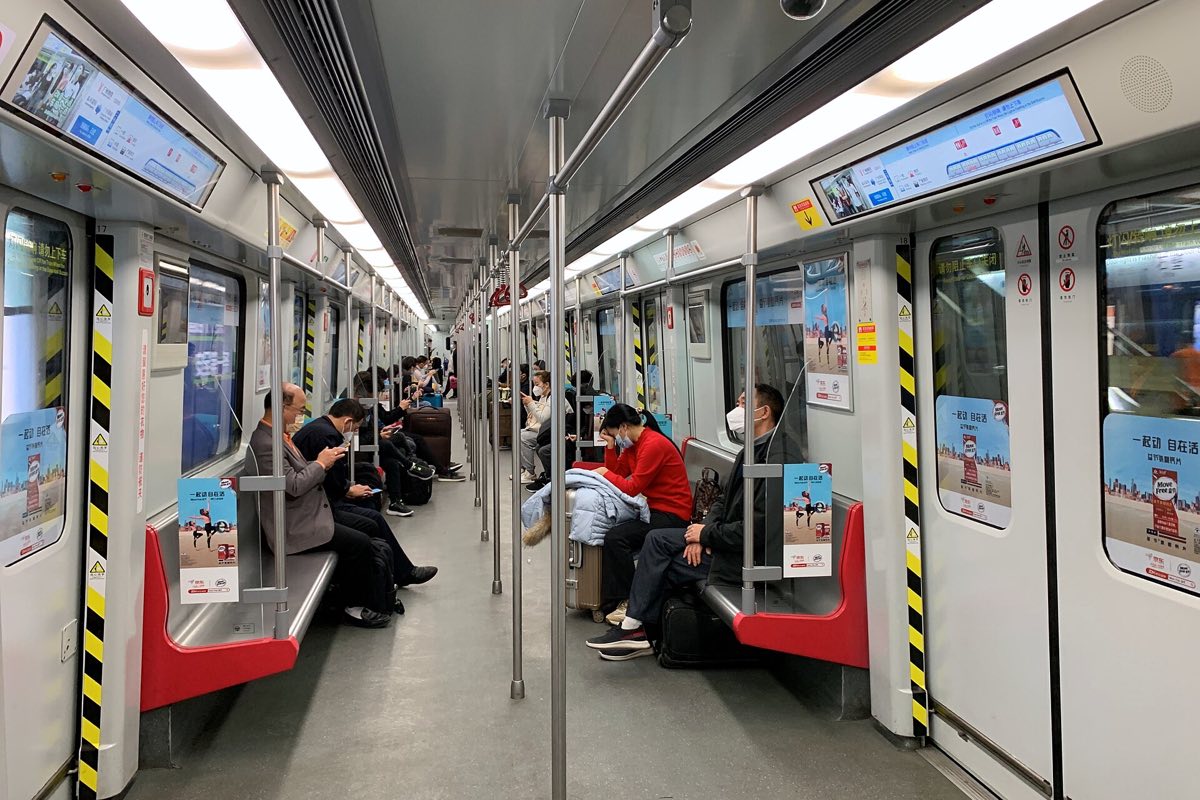
Guangzhou's metro is 19 lines, ~780km, ~399 stations — third largest in China, third busiest in the world, and the answer to almost every journey. Fares are ¥2–20 by distance, most trips ¥2–8; day passes are ¥20 (24h) / ¥50 (72h); service runs roughly 06:00–23:30. Since 12 October 2025 you can tap a foreign contactless Visa, Mastercard, Amex, JCB or UnionPay card straight at the gate — no app, no ticket machine, no queue. Line 1 is the old-city spine and the one to learn. The APM is a flat ¥2 and the best way to see the new CBD. Line 3 is the airport line and the most crowded metro line in China — genuinely unpleasant 08:00–09:30 and 17:30–19:30.
Which lines actually matter
| Line | What it gets you | Note |
|---|---|---|
| Line 1 | Chenjiaci · Changshou Lu · Huangsha · Gongyuanqian · Dongshankou · Tiyu Xilu · Guangzhou East | The old-city spine. If you learn one line, learn this one. |
| Line 2 | Guangzhou South · Guangzhou Railway Station · Yuexiu Park · Gongyuanqian · Haizhu Square · Sun Yat-sen Memorial Hall | Museums and the HSR hub. |
| Line 3 | Airport North (T2) · Guangzhou East · Tiyu Xilu · Zhujiang New Town · Canton Tower · Hanxi Changlong (Chimelong) | The most crowded line in China. Avoid 08:00–09:30 and 17:30–19:30. |
| Line 5 | Xiaobei · Taojin · Zhujiang New Town · Liede · Zoo | The Xiaobei food quarter. |
| Line 6 | Huangsha · Beijing Lu · Yide Road · Dongshankou | Sacred Heart Cathedral, Beijing Road. |
| Line 8 | Pazhou (Canton Fair) · Xingangdong · Chigang | Packed 08:30–10:00 and 17:00–18:30 during fair weeks. |
| APM | Canton Tower · Haixinsha · Opera House · Huacheng Dadao · Linhexi | Driverless, flat ¥2, nine stations under the new city's axis. The single most useful line for sightseeing the CBD. |
| Line 11 | The loop, opened 28 Dec 2024 | Put Baiyun Mountain's south gate on the network at Yuntai Garden. |
| Line 18 | Guangzhou East ↔ Nansha in 30 min express | 160 km/h — the fastest metro in mainland China. |
| Guangfo Line | Direct to Foshan, ¥7–12 | The world's first cross-city metro line. |
| Haizhu Tram | Canton Tower → Party Pier → Wanshengwei | Surface light rail. Scenic, cheap, and a good way to reach the nightlife strip. |
2025 ridership was 3.024 billion, with a single-day record of 14.093 million on 31 December 2025. Rule of thumb worth publishing: Guangzhou is bigger than it looks — organise your days by half-day neighbourhood blocks and do not criss-cross. A typical tourist walking day here is 7–12km, and April–September humidity makes that materially harder than the same distance anywhere temperate.
How a foreigner actually gets through the gate
| Method | How | Best for |
|---|---|---|
| Tap a foreign contactless card | Visa, Mastercard, Amex, JCB or UnionPay straight at the gate — live since 12 Oct 2025 | Everyone. This is the simplest option and it needs no app. |
| Alipay / WeChat transit QR | Open the mini-program, scan at the gate | People already using Alipay for everything else |
| Guangzhou Metro app | v6.3.0+, real-name registration required | Longer stays |
| Yang Cheng Tong 羊城通 | ¥20 deposit, ~10% fare discount | Also works on buses, ferries and in Foshan |
| Cash tokens | Machines at every station | Backup when everything else fails |
How long things actually take
| From → To | How | Time & cost |
|---|---|---|
| Baiyun Airport → Tiyu Xilu (Tianhe) | Line 3 | ~45 min, ¥6–8 |
| Baiyun Airport → old city | Line 3 + Line 2 | ~50 min |
| Baiyun Airport → city by taxi | 34km | 45–60 min, ¥140–180 |
| Tianhe ↔ Beijing Road | Line 1 | ~20 min |
| Tianhe ↔ Shamian / Huangsha | Line 1 | ~30 min |
| Zhujiang New Town ↔ Canton Tower | APM | ~8 min, ¥2 |
| Tianhe ↔ Chimelong | Line 3 | ~35–45 min |
| Guangzhou South ↔ Hong Kong West Kowloon | HSR | 47–60 min, ¥185–240 |
| Guangzhou South ↔ Shenzhen North | HSR | ~30–35 min, ¥74 |
| Guangzhou ↔ Foshan | Guangfo Line | ~40–60 min, ¥7–12 |
Four railway stations, and they are not interchangeable
Guangzhou South 广州南站 (Panyu, ~17km southwest; Lines 2, 7, 22) is the main high-speed hub — Hong Kong, Shenzhen, Wuhan, Beijing, Shanghai, Guilin. Guangzhou East 广州东站 (Tianhe; Lines 1, 3, 18) runs the Shenzhen intercity plus 13 daily departures to Hong Kong West Kowloon, and if you are staying downtown that matters enormously. Guangzhou Railway Station 广州站 (Yuexiu; Lines 2, 5) handles legacy slower long-distance services and sits in the wholesale and bus district with the city's weakest reputation. Guangzhou Baiyun 广州白云站 (Line 12) opened 26 December 2023 to relieve the others.
GBA intercity rail boards like a metro — no advance ticket, swipe the Guangzhou Metro QR, a national transport card, Yang Cheng Tong or Lingnan Pass. Thirty-nine stations, 200 km/h, and it is what makes Foshan, Dongguan, Zhaoqing and Huizhou feel like suburbs. One historical note: the Guangzhou East → Hung Hom conventional through-train was suspended in 2020 and resumption is unverified — the practical Hong Kong route is HSR to West Kowloon.
Use DiDi, not a street taxi. Guangzhou's airport and station taxi ranks are where the city's one persistent scam lives — drivers refusing the meter and quoting ¥300–500 for a ride that meters at ¥140–180. DiDi quotes the fare up front, tracks the route and removes the language problem entirely. It runs inside Alipay and WeChat if you would rather not install it separately.
Google Maps does not work in mainland China. It is blocked, and even over a VPN the base map is shifted by China's mandatory GCJ-02 coordinate offset and the points of interest are years stale. The Directions button on this page is for planning from home. On the ground use Amap (高德地图), which has a real English mode — or just use the metro line, station and exit number printed on every page here, which is what locals use.
Questions people actually search
Can I use a foreign card on the Guangzhou metro?
Yes — since 12 October 2025 you can tap a foreign contactless Visa, Mastercard, Amex, JCB or UnionPay card directly at the gate. No app, no registration, no ticket machine. It is the single easiest way for a visitor to use the system and it is barely reported outside China.
How much is the Guangzhou metro?
¥2–20 by distance, with most city trips landing at ¥2–8. Day passes are ¥20 for 24 hours and ¥50 for 72 hours; a Yang Cheng Tong card costs ¥20 deposit and gives about 10% off fares plus bus, ferry and Foshan use. The APM line is a flat ¥2.
Which Guangzhou metro line is the busiest?
Line 3, notoriously — it is the most crowded metro line in China. It is also the airport line and the one to Canton Tower and Chimelong, so you will use it. Avoid 08:00–09:30 and 17:30–19:30 if you have any flexibility; the difference is dramatic.
Are taxis safe in Guangzhou?
Metered taxis are fine; the taxi ranks at the airport and the big stations are where the city's one persistent scam lives — drivers refusing the meter and quoting ¥300–500 for a ¥140–180 ride. Use DiDi instead. It quotes the fare up front, tracks the route, and removes the language problem entirely.
What time does the Guangzhou metro stop running?
Around 23:30, with service resuming about 06:00. That matters most for the late-night food scene — the ghost market runs midnight to 05:00, long after the last train, so budget a DiDi home before you go.