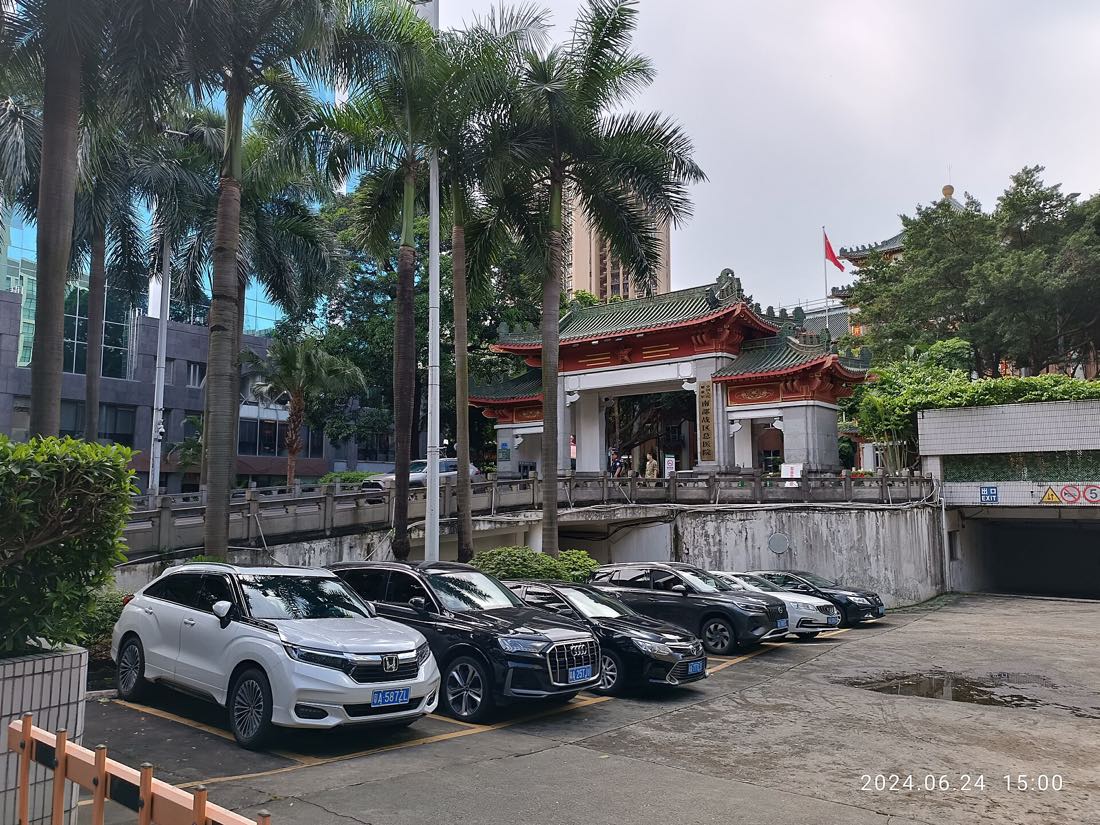
Dongshankou:
The Most Under-Covered District in Guangzhou
This is the most under-covered district in Guangzhou. Dongshankou is a quarter of 1920s and 30s Republican-era villas — red brick, arched verandahs, built by returning overseas Chinese — under banyans in eastern Yuexiu, colonised since about 2018–20 by independent coffee, vintage clothing and small galleries. It costs nothing, takes two to three hours on foot, and has almost no foreign visitors in it. Metro Lines 1 and 6 to Dongshankou. Think of it as Guangzhou's answer to Shanghai's former French Concession at a quarter of the scale and a fraction of the tourist load.
Villas built by people who left, and came back rich
Dongshan was its own district until 2005, when it was absorbed into Yuexiu. The architecture is the reason it still reads as separate.
In the 1920s and 30s, Cantonese emigrants who had made money abroad came back and built houses here — red brick, arched verandahs, deep eaves, walled gardens, a hybrid of Lingnan and whatever they had seen in the Americas and South East Asia. The result is a few hundred metres of quiet lanes that look like nowhere else in southern China, still lived in rather than preserved behind ticket barriers.
The old pairing tells you the social geography in eight characters: 东山少爷,西关小姐 — Dongshan young masters, Xiguan young ladies. Dongshan was the officials, officers and returnees; Xiguan was the merchant families in the west. Both halves of that sentence are still visible on the ground, which is unusual for a Chinese city that rebuilt itself as thoroughly as this one.
Since roughly 2018–20 the ground floors have filled with independent coffee, vintage clothing and small galleries, and Dongshankou became the place Guangzhou's own twenty-somethings spend a Saturday. It is the clearest local example of the 城市漫步 citywalk trend, and it is almost entirely absent from English-language guides — which is exactly why it is still pleasant.
What to actually do here
Xinhepu
The core lane network and the densest run of villas. Walk it slowly and read the doorways — plaques, dates and the occasional original tilework survive. This is where most of the coffee and vintage shops have opened, and where the weekend crowd of local photographers is.
Peizheng Road
The other named lane worth deliberately walking, quieter than Xinhepu and with the better uninterrupted stretches of brick and verandah. Together the two make a loop of about two hours if you stop for coffee, which you will, because that is the local sport here.
Nonglinxia Road
Where people in this district actually eat, as opposed to where they photograph their coffee. Ordinary Cantonese neighbourhood restaurants, noodle shops and dessert houses at ordinary prices. Nothing here is curated for visitors and no menus are translated.
Taojin and Huanshi East
The 1980s and 90s expat and hotel belt — the Garden Hotel, older pubs, the first wave of international business in Guangzhou. It is dated rather than historic and it explains a lot about why long-term foreign residents describe the city the way they do. Half an hour, as context.
Wenming Road
Two Bib Gourmand shops, a congee corridor and dessert houses open past midnight, on a 400m strip. It is the natural food ending to a Dongshankou afternoon and the single highest-value eating street in the city for a visitor.
Dongshankou, practically
Yuexiu — so it
is priced like it.
Administratively this is eastern Yuexiu, which means you get villa-quarter mornings at old-city prices rather than CBD ones: roughly ¥200–1,200 a night against ¥350–2,500 two metro stops east in Tianhe. Lines 1 and 6 put the whole historic core within fifteen minutes. Check that any property you book accepts foreign passports, and confirm rather than request the booking before you fly.
Compare Yuexiu hotelsQuestions people actually search
What is Dongshankou in Guangzhou?
A quarter of 1920s and 30s Republican-era villas in eastern Yuexiu, built in red brick with arched verandahs by Cantonese who had made money overseas and returned. Since about 2018 the ground floors have filled with independent coffee shops, vintage clothing and galleries. Metro Lines 1 and 6, Dongshankou station, and it costs nothing to walk.
Is Dongshankou worth visiting?
It is the best citywalk in Guangzhou and the most under-covered district in the city, so yes — with the caveat that there is no headline sight, no ticket and no museum. You are going for two or three hours of intact 1920s streetscape, coffee and almost no other foreign visitors. If that sounds thin to you, skip it.
How do you get to Dongshankou?
Metro Lines 1 and 6 both stop at Dongshankou, and the station exits open more or less onto the lanes — Xinhepu and Peizheng Road are the two to walk. From Gongyuanqian in the old core it is about ten minutes on Line 1; from Tiyu Xilu in Tianhe about eight minutes westbound. Fares are ¥2–4.
Is Dongshankou like Shanghai's French Concession?
It is the closest thing Guangzhou has, at roughly a quarter of the scale and a small fraction of the tourist load. The architecture is different in origin — overseas-Chinese returnee villas rather than foreign concession housing — but the texture of low brick buildings, big street trees and small independent shops is genuinely comparable, and far quieter.
What does 东山少爷,西关小姐 mean?
Dongshan young masters, Xiguan young ladies. It is an old Guangzhou saying about the two ends of the city: Dongshan in the east housed officials, officers and returned emigrants, while Xiguan in the west housed the merchant families. Both districts still look the part, which is what makes walking one after the other worthwhile.
Where do locals eat around Dongshankou?
Nonglinxia Road, a few minutes from the villa lanes, is the everyday answer — neighbourhood Cantonese restaurants and noodle shops at ¥25–60 a head with no English menus. For a better meal, Wenming Road is fifteen minutes west and holds two Bib Gourmand shops plus dessert houses that stay open past midnight.